Client:
Client Confidential
Services:
Human-AI Interaction, Healthcare UX, Clinical Decision Support Systems, User Research, Information Architecture, Interaction Design, Usability Testing, Design Thinking
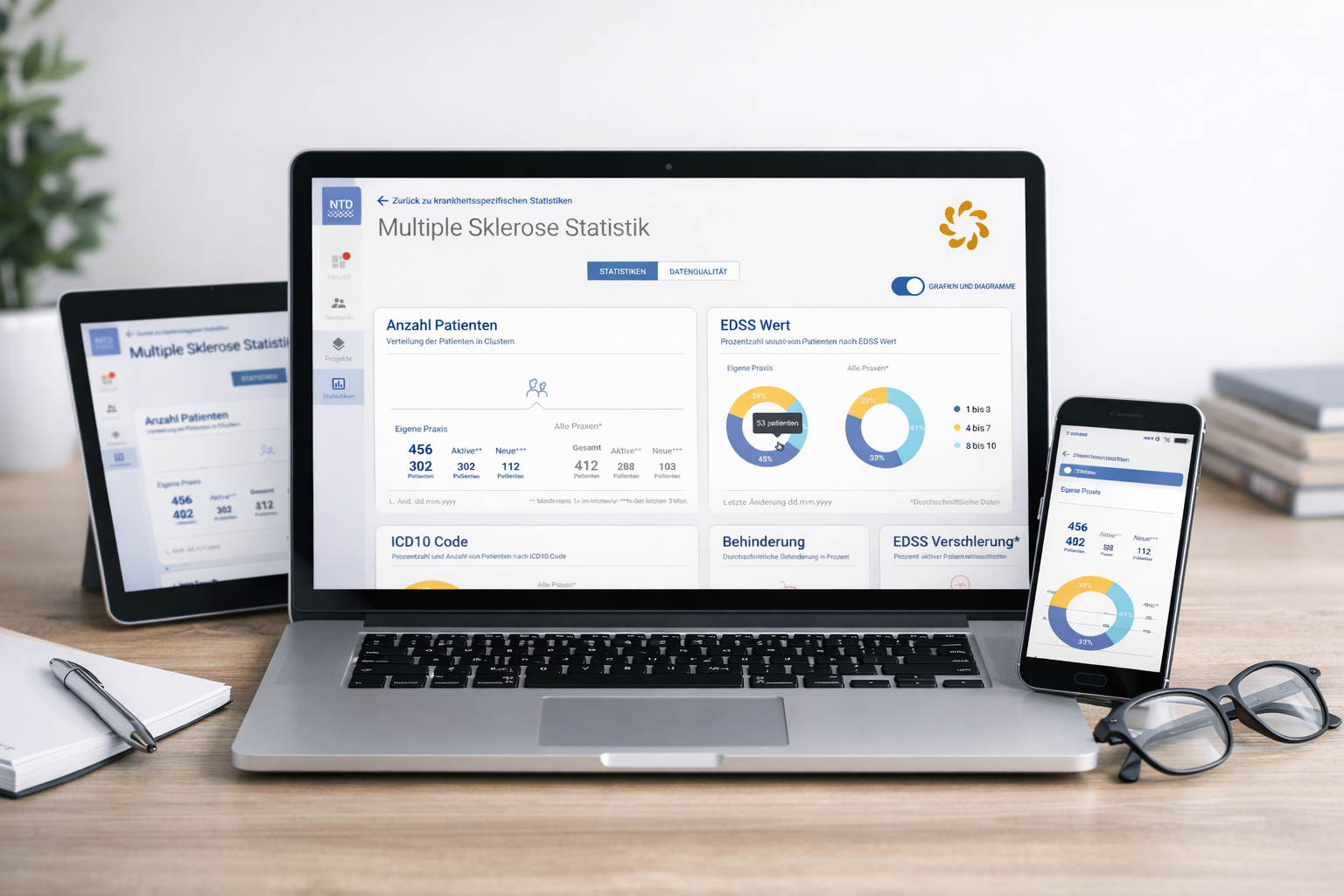
During my time at Experientia Global, I worked on the design of a digital platform aimed at supporting neurologists in the treatment of complex neurological diseases such as multiple sclerosis and cluster headaches.
The platform aimed to combine clinical knowledge, patient data, and predictive models to support physicians in making more informed therapy decisions.
A key challenge was that physicians often distrust predictive systems if they are not transparent and well integrated into their workflow. The goal was therefore to design a trusted interface between neurologists and predictive healthcare technologies.
Senior Human-Computer Interaction Consultant
Responsibilities included:
The project followed a human-centered design process from research to validated prototype.
User Research & Requirements Modeling
User and usage requirements were identified through interviews, formative evaluations, and cognitive walkthrough sessions with neurologists.
Concept Design
Usage scenarios and interaction patterns were developed to demonstrate how physicians would interact with the system in clinical practice.
Information Architecture
Card sorting sessions and task modeling were used to structure the platform’s modules, features, and navigation.
Prototyping & Usability Testing
Interaction flows were prototyped and validated through multiple usability testing cycles to ensure clarity, usability, and trust in the system.
The project resulted in a clear design roadmap and an early beta version of the platform.
By focusing on transparent Human-AI interaction, the solution improved acceptance among physicians and demonstrated how predictive healthcare technologies can be integrated into clinical workflows.
The platform architecture was designed to support future expansion to additional diseases and clinical data sources.
Human-AI Interaction
Healthcare UX
Clinical Decision Support Systems
User Research
Information Architecture
Interaction Design
Usability Testing
Design Thinking


